Showing posts with label St. John's Island. Show all posts

Saturday, January 25, 2014

My love for TMSI-SJI

The Tropical Marine Science Institute, TMSI in short, is an institution formed with the National University of Singapore (NUS).  The institution aims to play a strong role in promoting integrated marine science, in research and development, as well as to establish itself as a regional and international education and training centre through active collaboration with academic, government and industrial sectors. Major research areas in TMSI are Marine Environmental Management; Underwater Remote Sensing and Oceanography.
TMSI homepage
www.tmsi.nus.edu.sg
There are two TMSI research facilities - one located on the main campus of NUS at Kent Ridge while second is located off mainland Singapore at St. John's Island (SJI). The institution also has research vessel, Galaxea, allowing researchers to conduct experiment in Singapore waters.
The Galaxea
[Image from TMSI's webpage, http://www.tmsi.nus.edu.sg/research-facilities-galaxea]

Tuesday, February 12, 2013

Stunning sunset with critters of St. John's Island

While exploring the shores of St. John's Island, everyone suddenly paused at where they were and started admiring the beautiful sunset, bidding goodbye to the second day of the lunar new year.
Sunset at St. John's Island
We were lucky to be on the outer edge of the water snake that visited from the northeastern side and turned in the clockwise direction on the boundary of mainland Singapore. At the beginning part of the trip, we experienced mild drizzle.
It was not longer after I started explore when I saw my first critter - a reef bristleworm (Eurythoe complanata). It looked like it was out hunting for food.
Head of the reef bristleworm
On a colony of blue coral (Heliopora coerulea), there were many tiny crabs coming out to feed. The crabs looked similar to the smooth spooner crab (Etisus laevimanus), but of much smaller size. They were out feeding on the surface of the blue coral.
Blue coral
Tiny crab 1
Tiny crab 2
Somewhere near the blue coral, I took a photo of this.

This is actually a fire anemone (Actinodendron sp.). I thought it was a species of soft flowery coral on shore and when I was editing the photo. It was Kok Sheng who surfaced that it could be the fire anemone after looking at the white stripes with spots at the bottom of the photo and oval shaped tip tentacles. Luckily for me as I did not try to touch it on shore. The fire anemone causes a nasty sting when touched. Phew and WOW!

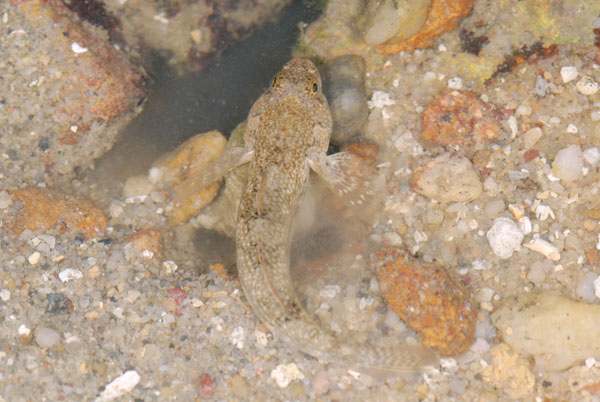
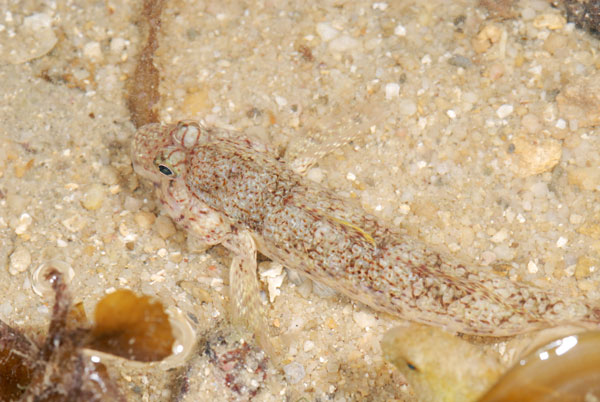
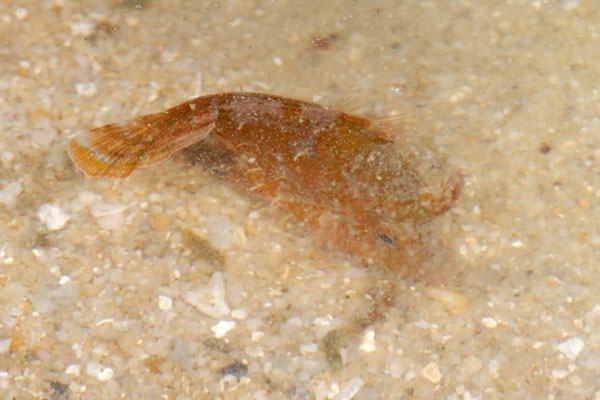
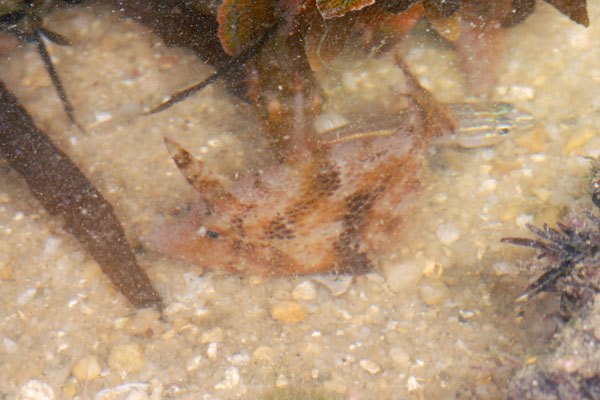
There were many gobies in the shallow water and they were kind enough to stay still for me to take a photo of them. They are not easy to spot sometimes as they blend very well with the colour of the sand, thus making it difficult to shoot them.
Goby 1
Goby 2
Goby 3
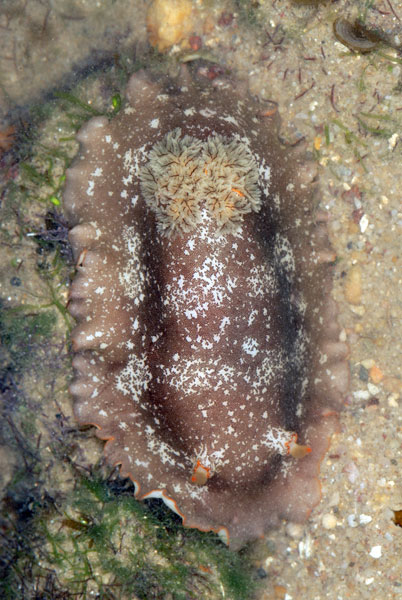
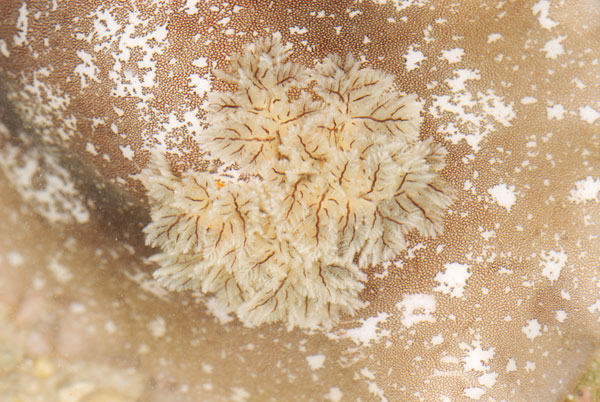
Tse-Lynn brought her son, Ethan, to visit the shore with us today and he helped to find a pair of platydoris nudibranch (Platydoris scabra). As mention by Ethan, the platydoris nudibranch has a fine rough surface.
Platydoris scabra - Dorsal view
Close up of rhinophores
Close up of feathery gills
Trying to flip back, showing the tiny oral tentacles
Underside view
Here's a video of the platydoris nudibranch moving.

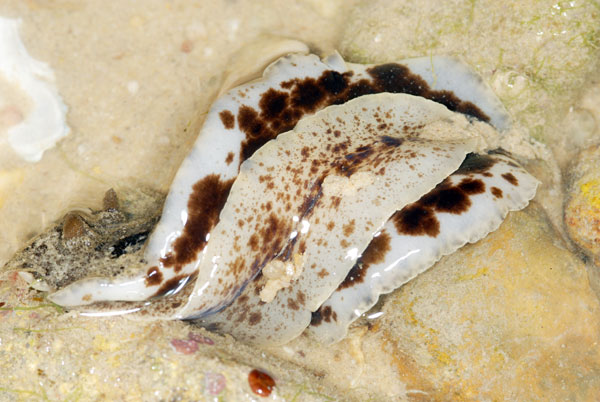
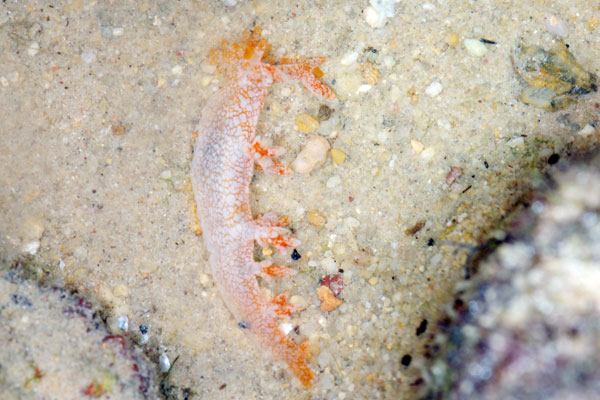
Ria found another type of nudibranch just as she was flipping a rock, the spotted foot nudibranch (Discodoris lilacina). I found it tricky to shoot this nudibranch as it colour patterns is very close to the sandy area.
Dorsal view,  rhinophore on the left.
Underside view
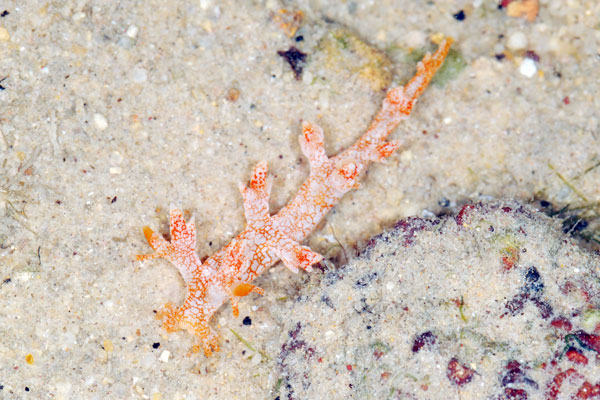
Ria also found the starry mouthed nudibranch (Bornella stellifer) while she was exploring the lagoon.
Head-on view
Dorsal view
Side view
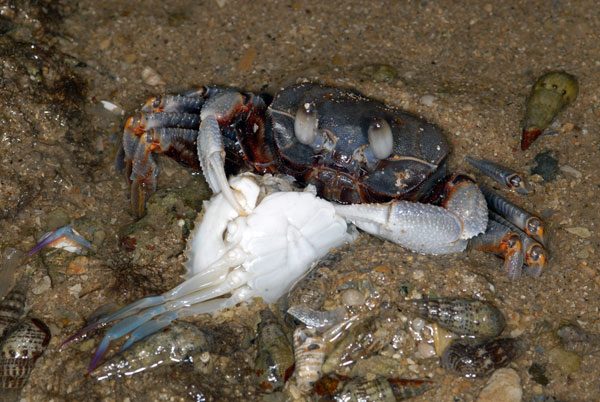
Moving on to the lagoon, the horn-eyed ghost crabs (Ocypode ceratophthalmus) are out hunting and enjoying their crabby meals. I saw two ghost crabs feeding on crab. One was feeding on a swimming crab and the second was feeding on a moon crab and it left bits of the pincer and arms on the shore.
Feeding on swimming crab
Feeding on moon crab
Broken remains of the moon crab on the shore near the ghost crab.
Here is a video of the second ghost crab feeding on the moon crab.

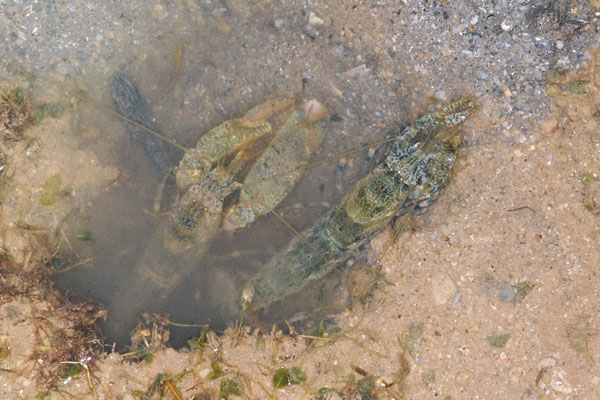
This trip was my first time seeing two snapping shrimp coming out of their borrow. Are they a mating pair? 
Usually we see only one actively beautifying its burrow entrance with a goby outside. However on this trip, I actually saw two of them coming out from the same hole. How interesting. One of the snapping shrimp when back into the burrow when it sensed my presence while the other stayed out a little longer. Both are ornamented snapping shrimp (Alpheus sp.)
Two snapping shrimp from the same hole
The smaller snapping shrimp outside the hole
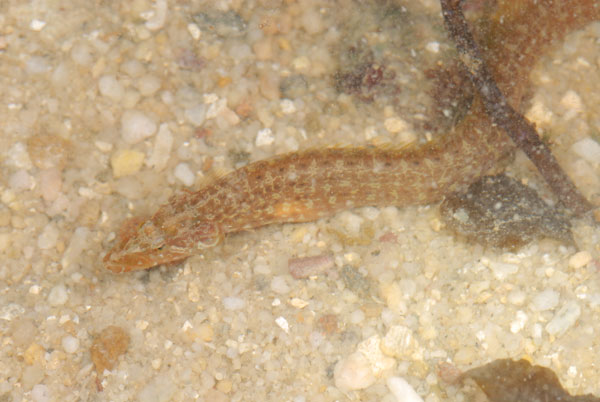
In the patch of seagrass in the lagoon, Kok Sheng spotted a pipefish.
Pipefish
Head shot of the pipefish
Ending off this post, here is a panorama shot of the beautiful evening sunset at St. John's Island, with the reef in the foreground.


Posts by others on this trip:
Mei Lin - Psychedelic Nature
Kok Sheng - CNY Day 2: St John's Island
Ria Tan - Surprises at St. John's Island

Saturday, November 17, 2012

Fishy and Sluggy Day at St. John's Island

Oh no.... As we landed on St. John's Island via private ferry service, we could see a fierce storm covering the skies of mainland Singapore.
Look at the cloud formation on mainland.
While round a corner of the island, the sky shows some of the pretty orange sunset with the fast moving storm clouds.
Sunset and storm clouds
St. John's Island is one of the many southern islands in Singapore. It was previously known as Pulau Sekijang Bendara or "deer flag". St. John's Island now houses the Tropical Marine Science Institute (TMSI) and AVA's Marine Aquaculture Centre (MAC) for marine research and development. There are also chalets available, managed by Sentosa, for public who wish to stay over on the island.  The Singapore Island Cruise provides ferry services to some of the southern islands with a fixed ferry schedule. You can also read more about the history of St. John's Island from the National Library Board's Infopedia.

Light rain started to fall shortly after the team began exploring the shore. However that did not stop us as we wore our ponchos or opened umbrellas and continued our work. The thick sargassum seaweeds in the rain means we have to be extra careful when walking around in shallow waters to avoid stepping on mr. stonefish.

I got my first find from Chay Hoon, an extraordinary sea hare (Aplysia extraordinaria)
Extraordinary sea hare
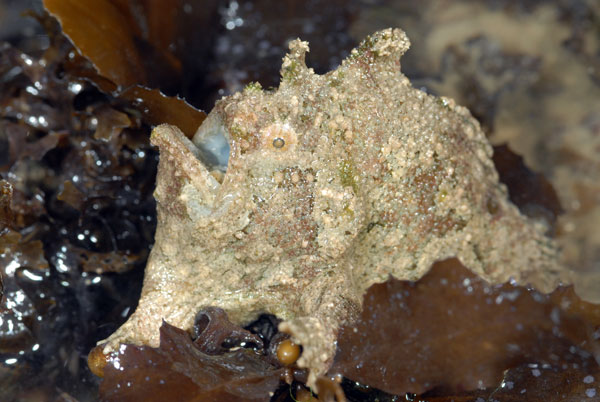
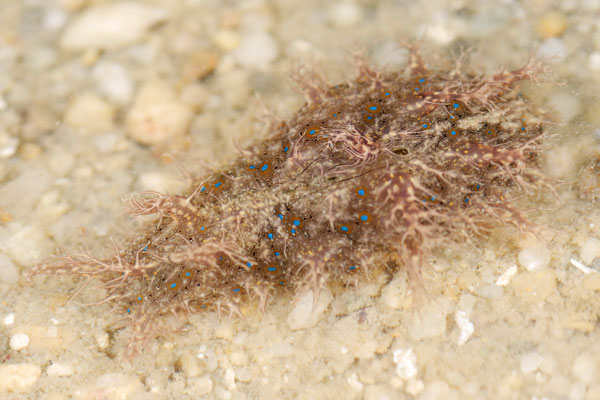
Chay Hoon also found a spotted-tail frogfish (Lophiocharon trisignatus). This is my first time seeing a frogfish in Singapore waters and also on intertidal trips. Exciting!
Top view of the frogfish
The frogfish gives a stunned face when out of water
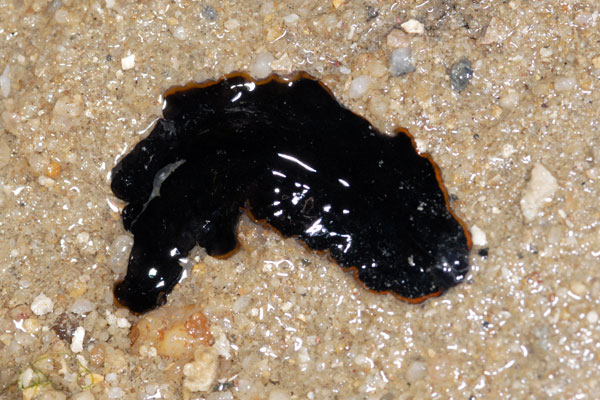
Nearby, there was a dawn flatworm (Pseudobiceros uniarborensis). It has an orange edge.
Dawn flatworm
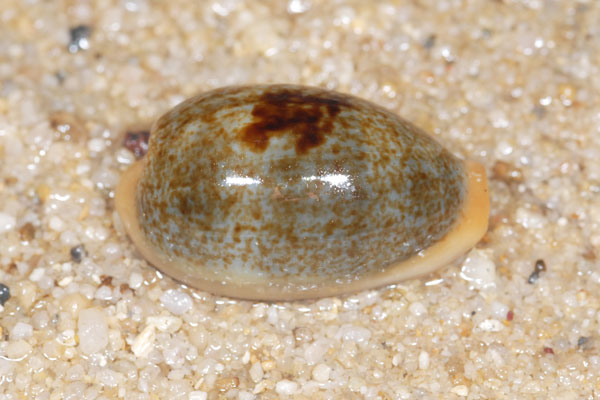
Also, an empty ovum cowrie (Cypraea ovum) was found.
Top view of the ovum cowrie
Underside view of the ovum cowrie, showing the "teeths"
Unfortunately, with my slippery fingers, the cowrie was flicked into the rubbles while I was trying to wash it and I could not find it again.

I caught my first octopus, thinking that it was some special octopus but later released it as it was a common octopus we always find on our shores.
Octopus
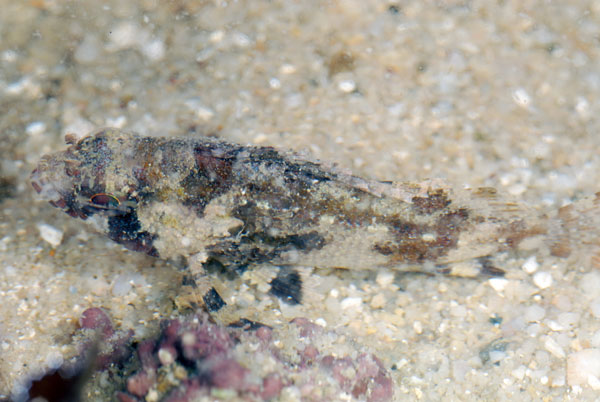
 With the sargassum seaweed bloom and shallow waters, many fish could be seen in the dark easily. There were chequered cardinalfish (Apogon margaritophorus), false scorpionfish (Centrogenys vaigiensis), gobies, plenty of filefish (Family Monacanthidae) and many other types of fish.
Chequered cardinalfish
Goby
Cardinalfish, goby and an ocean strider
Filefish
Filefish
Filefish
False scorpionfish
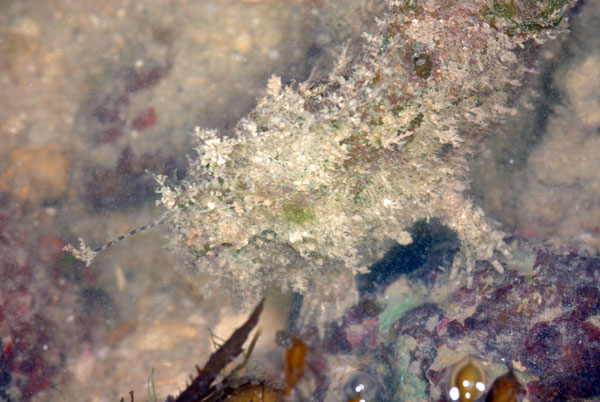
Carpet eel-blenny (Congrogadus subducens)?
Other sea slug seen include the hairy sea hare (Bursatella leachii).
Hairy sea hare
We also had a special find in the lagoon, the moon-headed sidegill slug (Euselenops luniceps).
Back view
Top view
Underside view
Side view, with visible gills
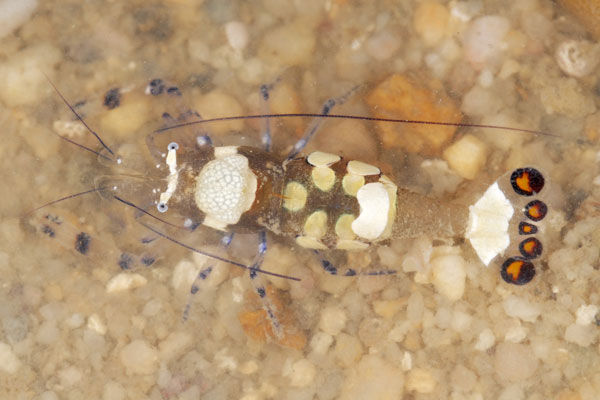
I only saw one giant carpet anemone (Stichodactyla gigantea) and a lonely five-spot anemone shrimp (Periclimenes brevicarpalis). Not very sure where the shrimp's partner went to. This shrimp is usually seen in a pair on the giant carpet anemone.
Giant carpet anemone
Five-spot anemone shrimp
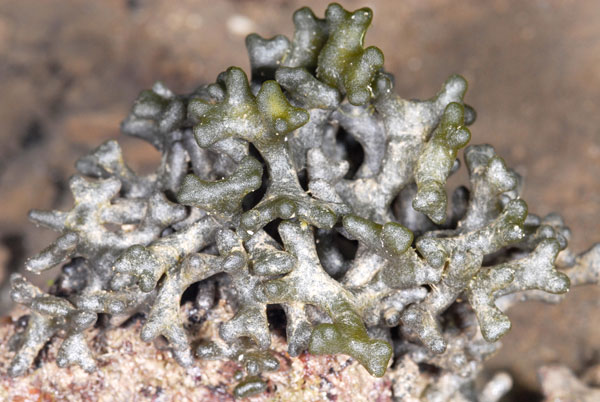
At the corner area of the island, I saw codium green seaweed (Codium sp.) and zebra coral (Oulastrea crispata)
Codium green seaweed
Zebra coral
Over at the lagoon, there were more exciting findings.
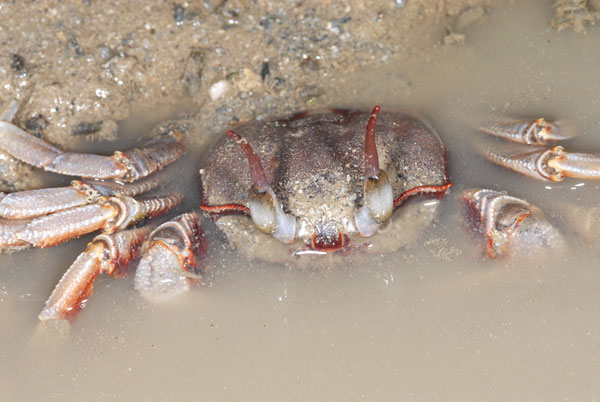
The horn-eyed ghost crabs (Ocypode ceratophthalmus) were very active and out on the shore. Ria saw one eating a fish as big as itself.
Horn-eyed ghost crab trying to hide in the shallow water
Close up of the crab
Crab eating a fish
Photo by Ria Tan
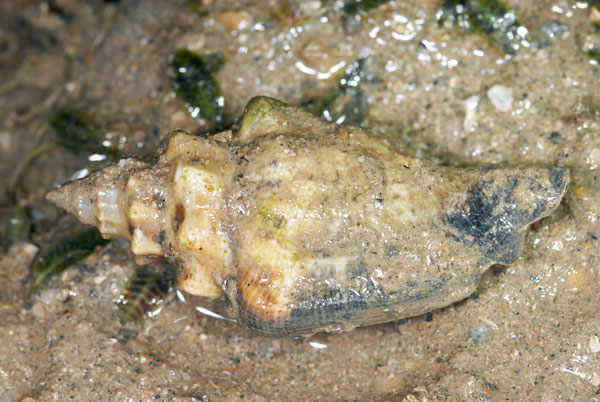
There were a number of black-lipped conch snails (Strombus urceus).
Underside of the conch
Top view of the conch
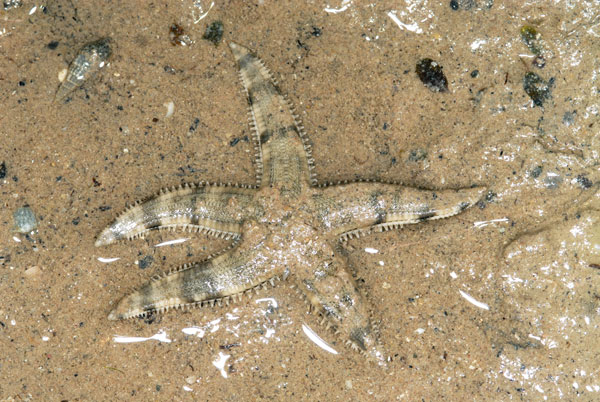
There were also many small common sea stars (Archaster typicus) in the lagoon. Look at the size of the sea star as compared to the snails nearby.
Top view of the sea star
Underside of the sea star
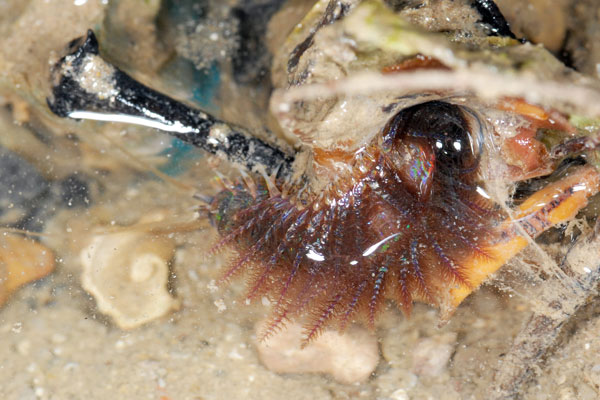
The happiest happy I saw would be the solitary tubeworm (Diopatra sp.). It has beautiful feathery appendages (branchiae with spiraled filaments around the central stem).  I had my first encounter with this worm during the recent Comprehensive Marine Biodiversity Survey Northern Shore Expedition. Arthur Anker has great photo of this beautiful worm I collect during the expedition.
Coming out of its tube
Showing its pretty feathery appendages
Reaching out to grab something
Diopatra sp (Onuphidae)
Photo by Arther Anker
The oddest find in the lagoon would be the shell of a garden snail.
Top view
Underside view
It was a great day on the reef of St. John's Island despite the passing rain.
Tomorrow will be our final trip for this month, to Pulau Hantu.


More posts about this trip:
Ria Tan - Sluggy on St. John's Island

LinkWithin

Related Posts Plugin for WordPress, Blogger...