 |
| Pulau Hantu looks tiny compared to its refinery neighbour, Pulau Bukom. Image from Google earth. |
Showing posts with label Hantu. Show all posts
Showing posts with label Hantu. Show all posts
Wednesday, May 7, 2014
The beauty of Pulau Hantu
Many people will relate 'Hantu' as the Malay word for ghost and hence the island Pulau Hantu is literally referred to as "Ghost Island". The island is actually far from the spooky tales and myths of restless spirits or ghosts.
The whole of Pulau Hantu is formed by two separate "Hantu" islets - Hantu Besar (Big Ghost) and Hantu Kechil (Little Ghost).

Sunday, April 20, 2014
Quiet but great day guiding at Pulau Hantu
It was a quiet day on the intertidal shore at Pulau Hantu. Despite that we still managed to find interesting stuff for the youths of Jurong Spring Youth Club. I was helping The Hantu Bloggers as a guide.
Here's a group photo of the youth participants with the four guides. Joining us on the trip is Minister of State Desmond Lee.
Here's a group photo of the youth participants with the four guides. Joining us on the trip is Minister of State Desmond Lee.
 |
| Group photo [Photo by MOS Desmond Lee on his Facebook] |
Saturday, May 11, 2013
Giant Clam and Handsome Shrimp at Pulau Hantu
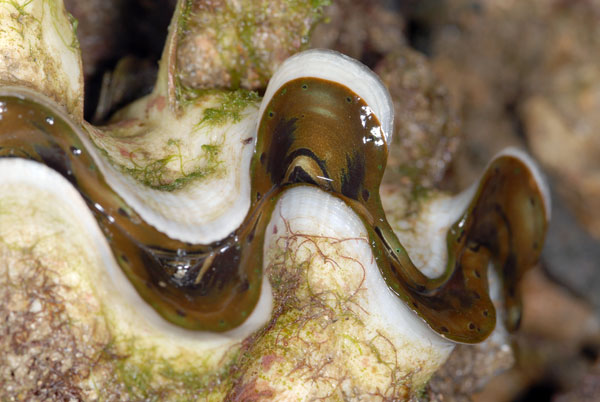
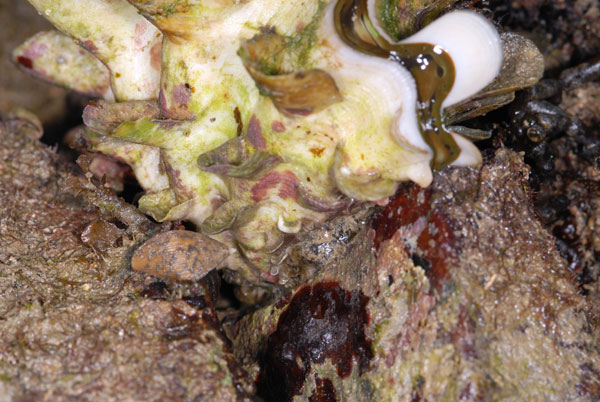
It was a great day at Pulau Hantu this morning. The team found about 5 giant clams growing on the outer reef patch!
However I only see one giant clam with the help of Marcus.
It was great to find out from Mei Lin, who studies giant clams, that these giant clams settled naturally on our reefs and they look they are growing well. How exciting. Their shells looked rather white and clean when they are still young.
What other interesting animals did I see today on the reef?
I saw a few Yellow-banded damselfish (Dischistodus fasciatus). Night time provided a good time for me to document fish as they are rather still.
I also had a very clam encounter with a Longspined scorpionfish (Paracentropogon longispinis). It was my first time encounter a real scorpionfish on the intertidal reef. However I had encounter a rather huge scorpionfish during my recent dive last month in the waters of Pulau Hantu.
This suspicious blob with tiny bumps on the surface is actually the Alicia anemone (Alicia sp.) when contracted.
It looks like the Alicia anemone is in season lately with frequent sightings of it recently. In fact, I saw another larger Alicia anemone towards the end of the trip. Initially, I thought it was a nudibranch but on closer observation it turned out to be the Alicia anemone.
The Alicia anemone contains stinging cells and its sting can be rather powerful. So far, none of us had experience with the stinging cells of the Alicia anemone so we are not able to describe how painful it is.
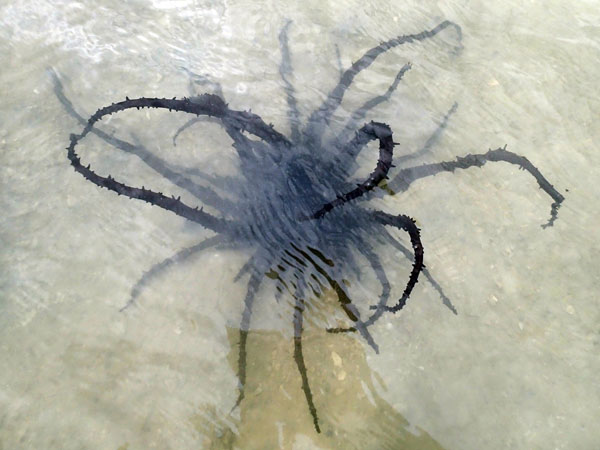
The other anemone that delivers a powerful sting is the Haeckel's anemone (Actinostephanus haeckeli). We also refer this anemone as the "Darth Vader anemone".
This cute octopus was waving at me when I approached it.
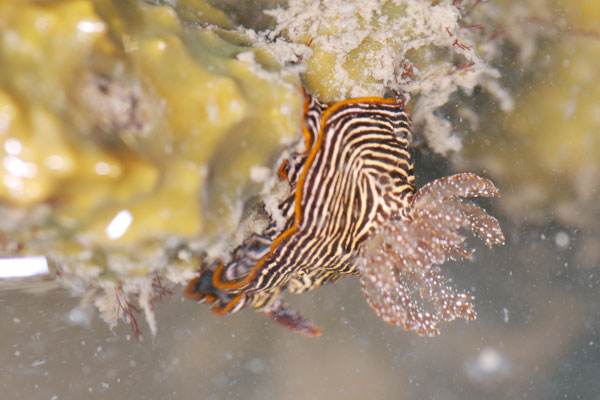
I only managed to take a shot of this Line chromodoris nudibranch (Chromodoris lineolata) on a sponge before it fell into a crevice and unable to be found. It was my only find for nudibranch but the rest of the team saw many other nudibranchs.
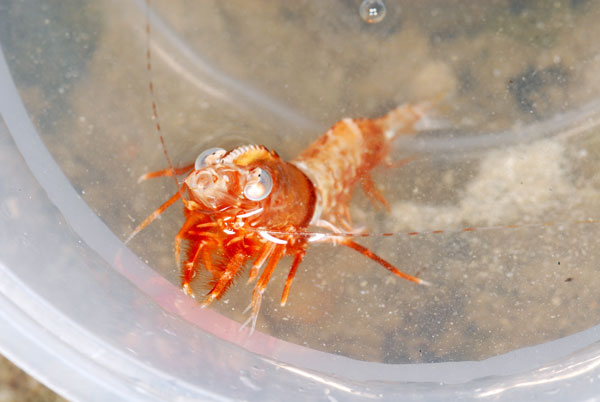
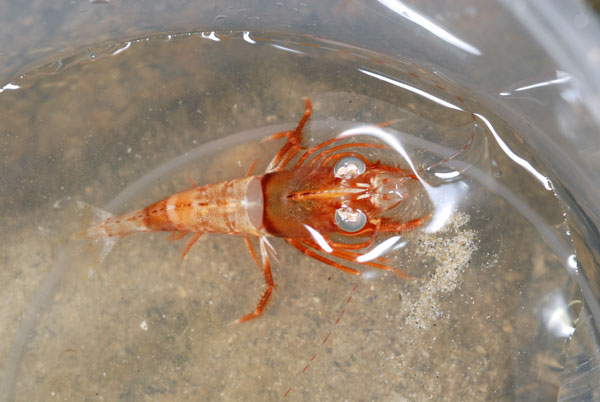
A special find for this trip was this handsome looking burrowing red shrimp.
The identity of the shrimp is unknown but it possibly be a Sicyonia sp.. I did not have good profile images of the shrimp as it was too active moving around in the container. Neither did I have it in situ, which I kind of regret it now. Here are some of the profiles of the shrimp I got.


On this trip, I only managed to spot one False clown anemonefish (Amphiprion ocellaris). It was so shy that it only appear long enough for me to take two quick shots. Most of the time, I could only see the wriggling activity in the anemone.
Another special find of the day is the young Cushion star (Culcita novaeguinea).
Here's view of the Cushion star underwater.
As the team was checking out the shore, the sky brightens up behind the refinery island.
It was a great trip. Though I saw little, they were very special finds.
Post by others on this trip
Ria - Nudis, Nemos and more at Pulau Hantu
 |
| Photo by Kok Sheng on his Facebook. |
 |
| Giant clam, with my size 8 booties as size reference. |
It was great to find out from Mei Lin, who studies giant clams, that these giant clams settled naturally on our reefs and they look they are growing well. How exciting. Their shells looked rather white and clean when they are still young.
 |
| Overview of the giant clam. |
 |
| Closeup of the clam. |
 |
| Attaching well onto a surface. |
I saw a few Yellow-banded damselfish (Dischistodus fasciatus). Night time provided a good time for me to document fish as they are rather still.
 |
| Yellow-banded damselfish |
 |
| Longspined scorpionfish |
 |
| Alicia anemone |
 |
| A slightly bigger Alicia anemone. |
The other anemone that delivers a powerful sting is the Haeckel's anemone (Actinostephanus haeckeli). We also refer this anemone as the "Darth Vader anemone".
 |
| Haeckel's anemone |
 |
| Octopus |
 |
| Chromodoris lineolata |
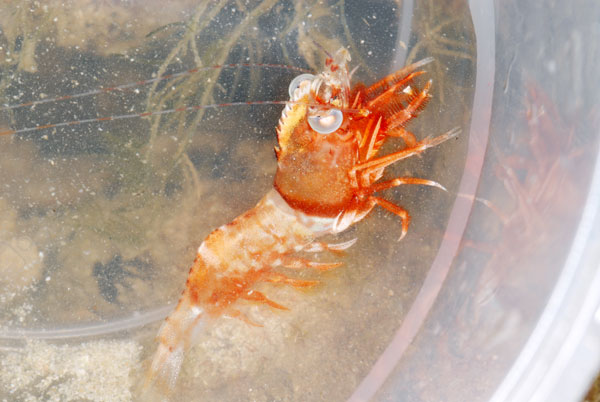 |
| Red shrimp |

On this trip, I only managed to spot one False clown anemonefish (Amphiprion ocellaris). It was so shy that it only appear long enough for me to take two quick shots. Most of the time, I could only see the wriggling activity in the anemone.
 |
| False clown anemonefish |
 |
| Cushion star. |
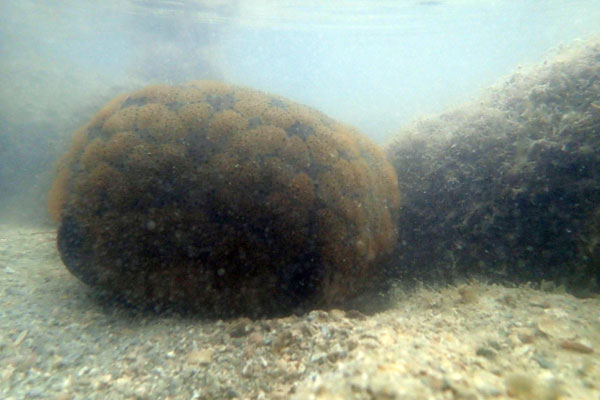 |
| Underwater view |
 |
| Dawn from Pulau Hantu |
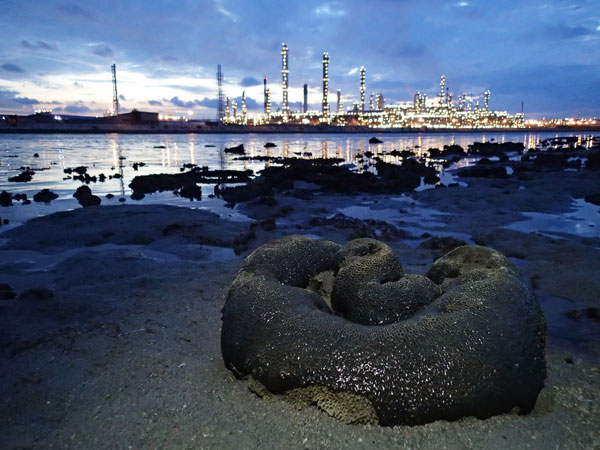 |
| Pulau Hantu reef in the foreground of the refinery island. |
 |
| Sunrise at Pulau Hantu. |
Post by others on this trip
Ria - Nudis, Nemos and more at Pulau Hantu
Sunday, November 18, 2012
Stormy Trip to Hantu Lagoon
It was a scary day for fieldtrip. Constant checking with the NEA's weather animation since afternoon shows a huge scary cloud mass heading down south.
On the boat ride, the animation on NEA's website shows a very scary angry cloud covering the western part of Singapore. Even Pulau Hantu was covered. At the pier, we were showered with the fierce blowing rain while waiting for passengers in the boat to alight.
From google map, Pulau Hantu is located on the south-west after Pulau Bukom. The whole Hantu Island is form by two islets: Pulau Hantu Besar (Big Ghost Island) and Pulau Hantu Kechil (Little Ghost Island). Hantu Besar is located on the West and Kechil on the East of the island. In between Hantu Besar and Kechil is the big Hantu lagoon.
Apart from the yearly intertidal checks done a team of shore explorers, the Hantu Bloggers conduct regular dive session on the reefs of Hantu. Regular updates on the reef health can be seen through their website.
The Hantu Kechil jetty lies in front of the Southern coastline of Pulau Bukom. In the low light, heavy rain, bright lightnings and loud thunder, the infrastructures on Bukom Island are lit with lights that looks like Christmas lights.
The heavy rain has caused serious murking in the water on the reef area that is densely covered with sargassum seaweed. It is not safe to walk in such murky water as mr. stonefish can be hiding anywhere.
The rain and lightning carried on for quite some time into the evening. I spent half the time walking around the shore looking at animals as my cameras were not weather proof. Majority of the photos here are taken in the later half of the trip, when the rain had died down. During this period, I helped to collect 3 samples of snapping shrimps. Despite the storm, there were many exciting things to be seen in the reef.
While walk down from the jetty to the shore, there were a few young mangrove plants rooted on the high shore and there were already leaves growing.
There were many common sea stars (Archaster typicus) everywhere in the lagoon. Some of them were alone, some were in pseudocopulation position. You can read about pseudocopulation position of sea stars in The Echinoblog. As mention in the blog, the pseudocopulation position allows maximised fertilisation during the mating process. Most of the time, we simply refer such position as the mating position.
There were many patches of tape seagrass and the coverage of the seagrass is average of at least 50-60 cm. I noticed that the tape seagrass (Enhalus acoroides) were about 40% covered with epiphytes and mostly tiny hermit crabs were found on the seagrass. I'm practicing my seagrass monitoring skills here. Hahaha...
On one patch of tape seagrass, I found a starry flatworm (Pseudobiceros stellae) moving on a grass blade.
A small three-spined toadfish (Batrachomoeus trispinosus) was seen lying motionless in a shallow pool, next to come rubble.
Other fish seen includes gobies, spangled emperor (Lethrinus nebulosus), plain halfbeak and many other small fish that were too fast for me to notice any features.
Marcus found a polka-dot nudibranch (Jorunna funebris).
Chay Hoon found a seagrass sea hare (Phyllaplysia sp.) and a small gymnodoris nudibranch (Gymnodoris sp.). The sea hare blends in so well on the tape seagrass that anyone would have missed it easily if we do not spent enough time looking at the seagrass. While taking photos of the seagrass sea hare, I found a even smaller seagrass sea hare moving behind the bigger sea hare.
The best finding for me in this trip would be a tiger-tailed seahorse (Hippocampus comes). It is so funny that I could not find the seahorse when I kept searching for it and when I was focus on looking at some other animal, the seahorse appeared.
Here's a video of the seahorse.
Nicole found a hyperactive cuttlefish, which we took quite some time to get it to stay still. Eventually, it settled down near by booties as seen in this video.
In the reefy area, I only see one giant carpet anemone (Stichodactyla gigantea). Suspicious movement on the tentacles indicates the presence of the false clown anemonefish (Amphiprion ocellaris) and there were at least 3 of them in this giant anemone.
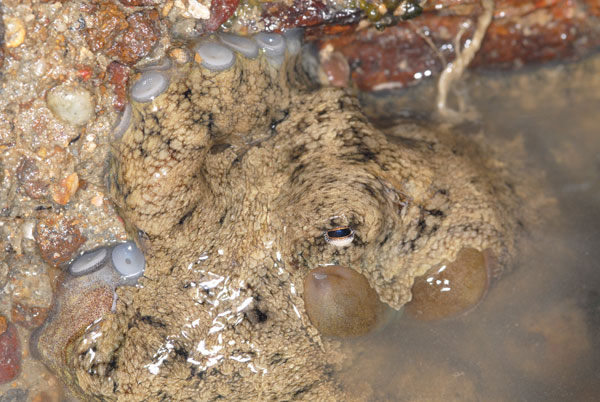
Back at the lagoon area in front of the jetty, Ivan found an octopus and he tried to coax the octopus into moving to deeper water but it refuses to move. Instead, it kept spouting water. Here's a series of the octopus spouting water.
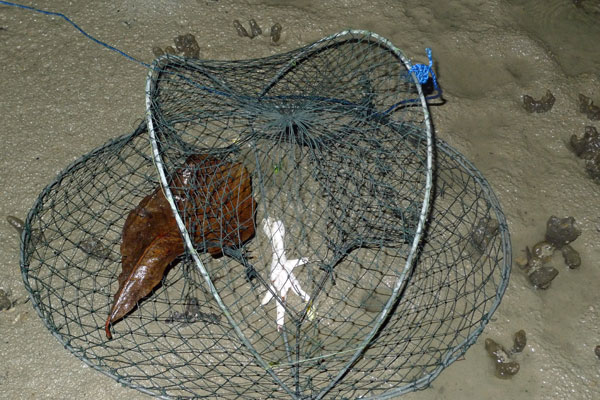
Alas, I found two crab traps placed in the lagoon. By the look of the chicken feet in the trap as bait, the traps was place in the lagoon probably earlier in the day. The second trap I found already had a flower crab in it. I cut the net to free the crab and removed both traps.
Other than close lightning strikes, nothing else can stop us from going down to the intertidal reefs to check out the marine life.
That's the end of the evening trips for this month. December is going to be a very busy month for me with work attachments at Raffles Museum of Biodiversity Research and my advance diving course at Lembeh Resort. Wait... I am suppose to be on school holiday like my students.
Well... anything involving marine biodiversity excites me!
More posts about this trip:
Ria Tan - Night of 'Nemos' at Pulau Hantu
 |
From google map, Pulau Hantu is located on the south-west after Pulau Bukom. The whole Hantu Island is form by two islets: Pulau Hantu Besar (Big Ghost Island) and Pulau Hantu Kechil (Little Ghost Island). Hantu Besar is located on the West and Kechil on the East of the island. In between Hantu Besar and Kechil is the big Hantu lagoon.
Apart from the yearly intertidal checks done a team of shore explorers, the Hantu Bloggers conduct regular dive session on the reefs of Hantu. Regular updates on the reef health can be seen through their website.
The Hantu Kechil jetty lies in front of the Southern coastline of Pulau Bukom. In the low light, heavy rain, bright lightnings and loud thunder, the infrastructures on Bukom Island are lit with lights that looks like Christmas lights.
 |
| Background: Pulau Bukom Foreground: Pulau Hantu Kechil Jetty |
 |
| Murky water on the reef. |
While walk down from the jetty to the shore, there were a few young mangrove plants rooted on the high shore and there were already leaves growing.
 |
| Young mangrove plant |
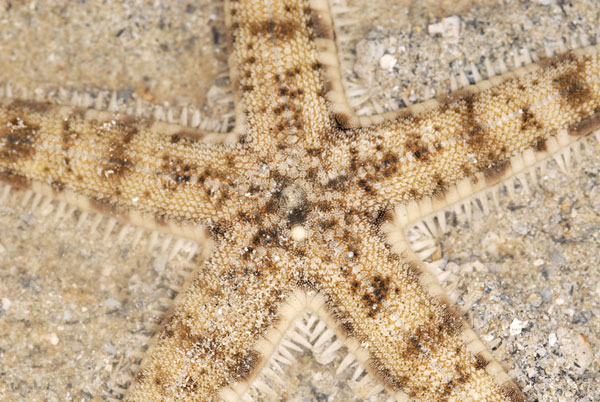 |
| Top view |
 |
| Underside view reveals the stomach sticking out through its mouth |
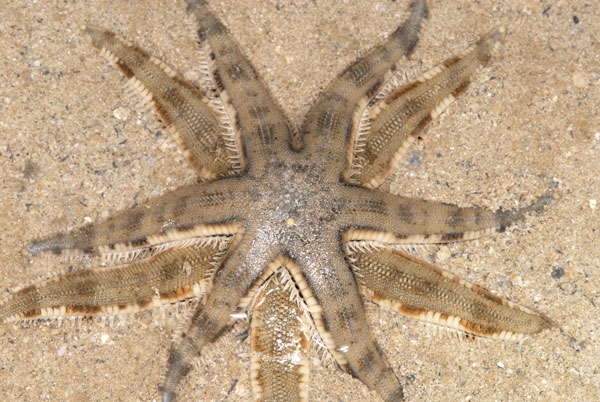 |
| Pseudocopulation position |
On one patch of tape seagrass, I found a starry flatworm (Pseudobiceros stellae) moving on a grass blade.
 |
| Starry flatworm |
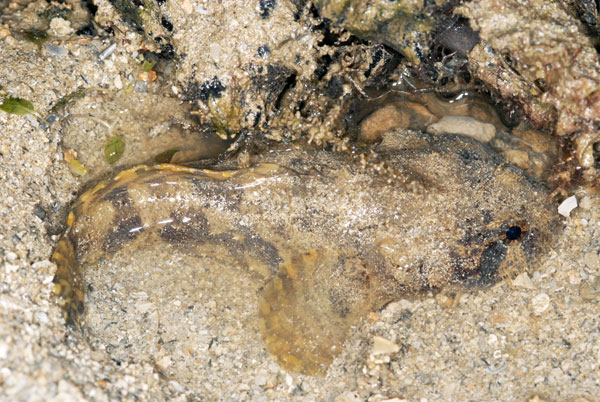 |
| Overview of the toadfish |
 |
| Closeup near its head |
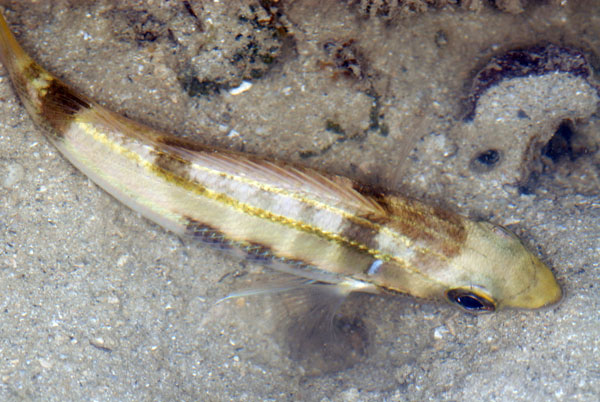 |
| Spangled emperor |
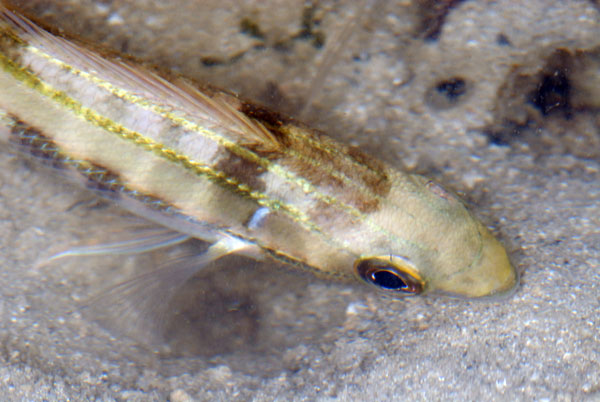 |
| Closeup of the spangled emperor |
 |
| Polka-dot nudibranch |
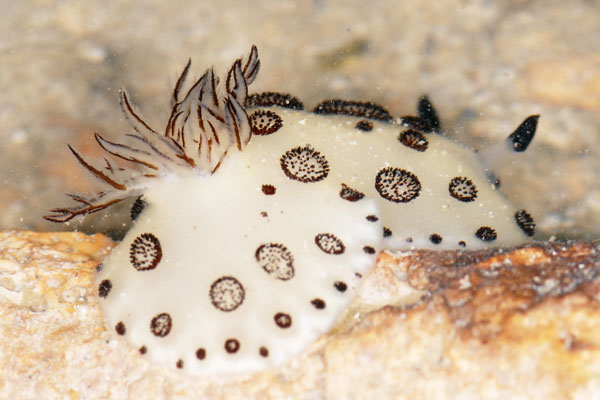 |
| Feathery gills |
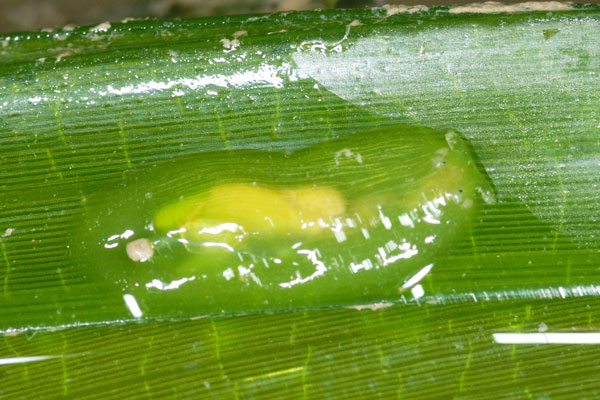 |
| Seagrass sea hare |
 |
| Smaller seagrass sea hare following behind |
 |
| Gymnodoris nudibranch |
 |
| Side view, showing details on its head |
 |
| An attempt to get a good profile of the seahorse |
Nicole found a hyperactive cuttlefish, which we took quite some time to get it to stay still. Eventually, it settled down near by booties as seen in this video.
In the reefy area, I only see one giant carpet anemone (Stichodactyla gigantea). Suspicious movement on the tentacles indicates the presence of the false clown anemonefish (Amphiprion ocellaris) and there were at least 3 of them in this giant anemone.
 |
| Only body seen |
 |
| Only tail seen |
 |
| No water |
 |
| Some water |
 |
| A jet of water |
 |
| Trap 1 |
 |
| Trap 2 |
 |
| Flower crab in trap 2 |
 |
| two traps gathered |
 |
| Chicken feet as bait |
That's the end of the evening trips for this month. December is going to be a very busy month for me with work attachments at Raffles Museum of Biodiversity Research and my advance diving course at Lembeh Resort. Wait... I am suppose to be on school holiday like my students.
Well... anything involving marine biodiversity excites me!
More posts about this trip:
Ria Tan - Night of 'Nemos' at Pulau Hantu
Subscribe to:
Posts (Atom)
LinkWithin
